
ECOWAS’s ECO and the Financial Integrity Blind Spot
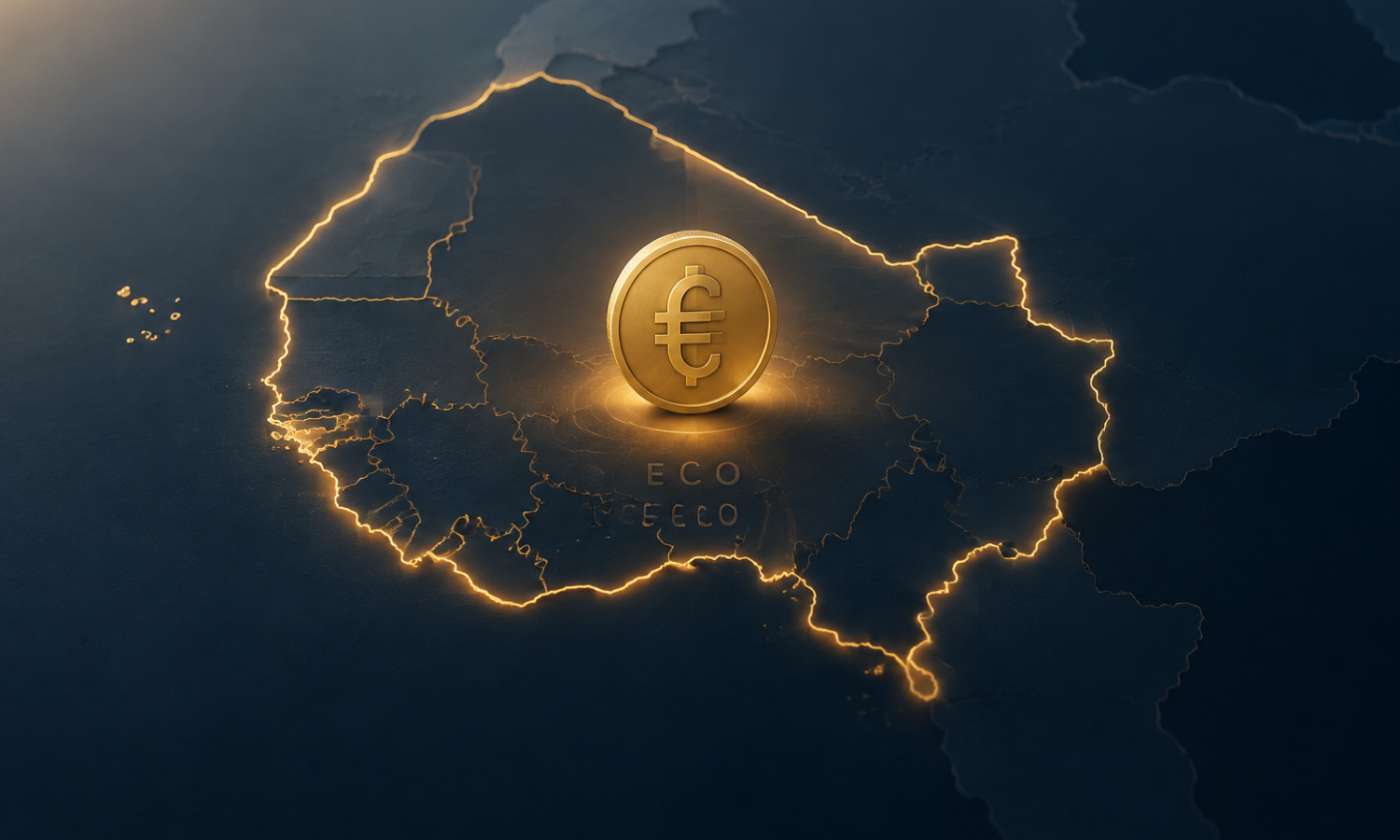
West Africa is inching closer to one of the continent’s most ambitious projects: a single regional currency, the ECO, intended to do for ECOWAS what the euro did for the eurozone. At their 69th Ordinary Session in Lungi, Sierra Leone, in July 2026, ECOWAS heads of state reaffirmed the 2027 launch target, with the ECO launching first among countries that meet the agreed convergence criteria and are ready to participate, with others joining subsequently as they become ready.
These criteria focus on the macroeconomic conditions necessary for monetary union, including price stability, fiscal discipline, limits on central bank financing of government deficits, and adequate foreign reserves. The ECOWAS 2024 Macroeconomic Convergence Report provides an official account of member states’ performance against these requirements. Yet, while macroeconomic stability is central to monetary union, an important question remains: does the convergence framework give sufficient consideration to financial integrity?
Should a country’s exposure to financial crime and the effectiveness of its anti-money laundering and counter-terrorist financing (AML/CFT) controls also be considered when assessing its readiness to participate in the ECO?
Why This Should Be Considered
A single currency doesn’t just harmonise prices and interest rates; it connects the financial systems of every participating state through shared payment systems, a common central bank and the movement of money across borders. This is a central feature of monetary union. However, it also means that weaknesses in one member state’s AML/CFT controls could create vulnerabilities for the wider union.
FATF’s own monitoring list shows how live this issue still is in the region. The FATF’s statement of 19 June 2026 on jurisdictions under increased monitoring illustrates the continuing relevance of this issue in West Africa. Côte d’Ivoire, which is a founding ECOWAS member, remains under increased monitoring, though FATF’s June 2026 Plenary found it has substantially completed its action plan and now awaits an on-site assessment to verify the implementation and sustainability of its reforms. Other regional jurisdictions have also changed status in recent years: Nigeria and Burkina Faso were removed from increased monitoring in October 2025, while Mali was removed in June 2025. These developments illustrate that AML/CFT progress varies across the region, with some countries still implementing reforms while the ECO project advances.
To be clear, FATF itself doesn’t call for countries under increased monitoring to be cut off from the international financial system. Rather, it advocates a risk-based approach and expressly rejects blanket de-risking. Nevertheless, a currency union entails a deeper degree of financial integration than ordinary cross-border banking relationships — with shared monetary institutions and payment infrastructure. This raises the question of how financial-integrity risks should be assessed within the proposed union.
ECOWAS’s convergence framework focuses on macroeconomic indicators, while financial-integrity risks also have potential economic consequences. The International Monetary Fund’s research on the effects of FATF grey-listing on capital flows examines the relationship between increased monitoring and capital inflows. The IMF has also identified potential consequences of pressure on correspondent banking relationships, including higher payment costs and effects on cross-border trade and financial connectivity. These concerns suggest that financial integrity merits consideration alongside macroeconomic stability in assessing readiness for monetary integration.
That gap raises one question that ECOWAS has not yet confronted directly: if a country’s AML/CFT deficiencies can affect its access to international financial services and capital, should financial integrity risks also inform the assessment of its readiness to participate in a shared currency?
There’s no easy answer. Introducing additional AML/CFT conditions into an already delayed project could create further challenges for implementation. However, incorporating financial integrity into the framework at an early stage could help ECOWAS identify and address shared risks before the currency begins circulating.
Conclusion
The criteria that receive the most attention in ECOWAS’s convergence reporting — inflation, budget deficits, debt, and foreign reserves — are among the easiest to quantify and track over time. Financial integrity is harder to quantify and benchmark across states with different legal systems and institutional capacities, making it easier to defer. However, as ECOWAS moves from aspiration to implementation, the real question isn’t whether financial-crime risk matters to the ECO’s credibility, but whether the bloc will address it within the framework it’s still developing or wait until the currency is already in circulation.
Sources:
- ECOWAS, Final Communiqué of the 69th Ordinary Session of the Authority of Heads of State and Government, Lungi, Sierra Leone, July 2026
- ECOWAS, ECOWAS and WAIFEM Strengthen Partnership to Foster Economic Resilience and Sustainable Growth in West Africa
- Financial Action Task Force, Jurisdictions under Increased Monitoring — 19 June 2026
- International Monetary Fund, The Impact of Gray-Listing on Capital Flows: An Analysis Using Machine Learning, IMF Working Paper 21/153, May 2021
By:
JIN Legal & Compliance Consultants
Address: 4 Boke Close, Wuse 2, Abuja, Nigeria
Email: jinlegalcompliance@gmail.com | info@jinlegalcompliance.org
Phone: +234-9168-961-183
Website: jinlegalcompliance.org
LinkedIn: Jin Legal Compliance & Consultants